Leaders, the world has changed

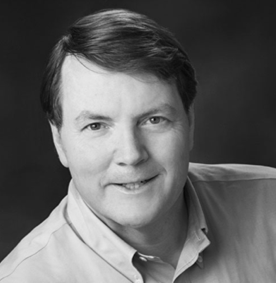
Professor Phillips O’Brien, Chair of Strategic Studies at the University of St Andrews, teaches on the Future Readiness executive education programme delivered by the University of St Andrews Business School Executive Education in partnership with the Future Readiness Academy and the ADGM Academy. Here, he reflects on the sharp shift in global conditions that all leaders must confront and explains why he will explore these issues further during the 8 December webinar.
If you lead today in any capacity, from public service to business to civil society, you may still be relying on behavioural assumptions that no longer match the world in which you operate. That gap between what leaders expect and what the global system now delivers is widening, posing risks that we cannot ignore.
For decades, leadership took place within a framework of relative stability. You could assume broad access to essential resources. You could rely on international institutions working well enough to support cooperation. You could plan on utilising long supply chains with confidence that they would hold. You could count on major powers maintaining broadly consistent relationships. That stability shaped how leaders thought, acted and made strategic decisions.
That world has gone.
Today, the international system is far less reliable. We can no longer take access to critical materials as a given. Alliances once regarded as unshakeable now show real strain. The future of liberal democracies is no longer assured. The likelihood of conflict is increasing, and the international system as a whole is less dependable than at any point in recent decades. Yet many leaders still act as if the structural conditions of the past half-century remain in place.
Some of this is denial. Some is hope. Neither offers a way forward.
Effective leadership in this environment requires a different mindset. Complacency has become a strategic vulnerability. Leaders will need to be more nimble, ready to adjust quickly and capable of working with fewer guarantees. They will have to anticipate risks once dismissed as unlikely but now far more probable. The pressures will only intensify.
Technology illustrates this shift clearly. It was once reasonable to assume that advanced technologies developed in one region would eventually spread to others. In today’s environment, states are far more inclined to protect their breakthroughs. If leaders fail to engage with the technologies that matter for their field, or if their organisations cannot access them, they can find themselves at a severe disadvantage very quickly.
The UAE, where the Future Readiness Summit will take place in January, presents both opportunities and challenges. The region has often acted as a bridge between global powers. Yet, many states have relied on an economic model based on resource extraction and the ability to buy in what they need. That approach is far more vulnerable in a world where we can no longer assume access, stability and predictability. Greater self-sufficiency will be essential, especially as the effects of climate change intensify. Unless global mitigation accelerates dramatically, which at present seems unlikely, leaders in the region must prepare for demanding scenarios.
These are the issues I will address in our webinar on 8 December. My argument is straightforward. The world has changed; the risks leaders face today are sharper and more complex, and strategies based on outdated assumptions will not hold.
What I hope to hear from participants is not just recognition of the shift but a readiness to act. Awareness is the starting point, not the destination. The real test for leaders now is whether they can think differently, adapt quickly and build resilience that does not depend on the assurances of another era.
To lead today, we must let go of the world we expected and face the world as it is.
Register here via Teams to join our free Teams Webinar, Spotlight on the Future Readiness Summit UAE 2026, on Monday 8 December 2025 at 12 noon GMT.