Monetary economists convene at Business School

Central bankers and academics gather in St Andrews to discuss current questions in monetary policy.
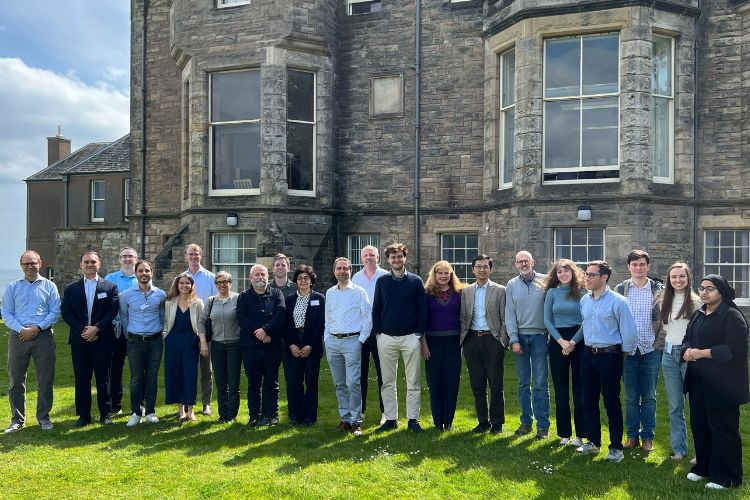
Monetary economists from central banks and universities across Europe and North America gathered at the University of St Andrews Business School earlier this month for the second St Andrews Workshop in Macroeconomics, debating the questions shaping central bank decisions worldwide.
Central bank economists travelled to the School’s Department of Economics at Castlecliffe from the Bank of England, the Bank for International Settlements, the Federal Reserve Board in Washington, and the San Francisco Federal Reserve Bank. They were joined by academics from the University of Oxford, Durham University, the University of Glasgow, Università di Roma Tor Vergata, and Justus-Liebig University Giessen.
Professor Mark Brewer, Dean of the Business School, opened the workshop. The first day focused on current issues in monetary policy. Sessions examined how the effects of quantitative easing differ between advanced and emerging economies, how the rise of shadow banking is reshaping the transmission of central bank decisions, and what anchors public trust in central banks during periods of crisis.
Fiorella De Fiore of the Bank for International Settlements delivered the keynote address. Her research examines how rare disaster events and limited public trust in government can deepen and prolong inflation, work that speaks directly to the post-pandemic experience of central banks worldwide.
The second day moved to the frontier between monetary policy and financial stability, with sessions examining bank balance sheets, tail risk and the increasingly urgent question of how monetary, fiscal and macroprudential authorities should coordinate.
Dr Jonathan Swarbrick, Lecturer in the Business School’s Department of Economics, chaired the organising committee alongside Dr Yulia Moiseeva, Dr Ozge Senay, Dr Giacomo Cattelan and Dr Ziran (Josh) Ding. Dr Cattelan also presented his own research at the workshop, showing how financial shocks bite far harder during periods of high uncertainty.

Dr Swarbrick, said:
“The workshop was a great opportunity to connect, build new research relationships and get to know each other’s work. It has helped push St Andrews further onto the map in monetary policy research and education.”